
As the Drugs Controller General of India (DCGI) is set to crack down on companies to ensure compliance with printing QR codes on top-selling brands to curb counterfeiting, top pharma companies say they welcome the regulator's mandate and that they are on track. They also view it as a positive step to ensure patient safety. Sheetal Arora, CEO of Mankind Pharmaceuticals, which has already adopted QR codes in 20 of their products, stated: "We strongly advocate for mandatory implementation of barcodes and QR codes on medicines as this initiative will not only protect patients but also strengthen the integrity of our healthcare system by reducing circulation of counterfeit drugs."

Car sales are experiencing a challenging phase with around Rs 60,000 crore worth of inventory lying unsold with dealers.

Most of the pharma units are failing in documentation, and validation processes, and many don't have full-fledged quality control laboratories.
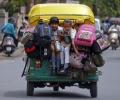
India's three-wheeler exports, which have been on a downhill trajectory over the past few years, are showing no signs of recovery in FY25, with key markets like Sri Lanka, Bangladesh, Nigeria, and Egypt witnessing subdued demand. In May, the country's exports plummeted 11.3 per cent year-on-year (Y-o-Y).

The Federation of Automobile Dealers Associations (Fada) has raised concerns over the rising inventory levels of four-wheelers at dealerships which have now reached a 60-day stockpile or around 550,000 units. This situation could mean a significant financial burden on dealerships due to the additional interest cost for the extended holding period. These 60-day inventory levels are nearing the 2018-19 levels when inventory days had approached 70 days, leading to the closure of around 282 passenger vehicle dealerships.

'In the new coalition government, India's reform agenda may prioritise job creation and factor market reforms.'

Varanasi, Detroit, and Venice have been selected to host a global initiative aimed at creating sustainable transportation solutions for cities as part of the 'Toyota Mobility Foundation's Sustainable Cities Challenge'. The initiative is a $9 million programme that will see these cities collaborate with innovators to develop and implement new mobility solutions. The cities, located in the US, India, and Italy, were chosen from a shortlist of 10 cities announced in November 2023.

India's luxury car rental market is experiencing a surge in demand, particularly in Tier 1 cities such as Mumbai, Bangalore, and Delhi, with executive travellers, especially from the tech sector and younger demographics like the millennials and the Gen Z, increasingly renting high-end vehicles for special occasions and domestic travel. Luxorides, a luxury car rental company, observed a 40 per cent year-on-year rise in bookings in 2024 (until April) on popular routes like Delhi-Rishikesh, Delhi-Vrindavan, and Delhi-Jim Corbett National Park, as well as Chandigarh-Manali and Chandigarh-Ladakh.

In recent months, several pharma multinational corporations (MNCs) are increasingly turning to Indian companies to expand market reach in the country's pharmaceuticals sector. Sanofi's partnerships with Dr Reddy's, Cipla, and Emcure, AstraZeneca and Mankind Pharma - teaming up for asthma medication distribution - are a few instances of this trend. This strategy allows MNCs to leverage established Indian networks and reach a wider audience. Indian companies also benefit from global brands and expertise, say analysts.

Battling the virus, enduring separation from loved ones, and working extended hours became part of the job.

'The focus needs to shift towards the ability to collect payments, particularly in tier-3 to tier-4 areas where acceptance is still lacking.'

Manufacturers of electric vehicles (EVs) have been lukewarm to the ad hoc subsidy scheme announced by the Centre for them. Sector majors have not been enthused by the lower level of incentives in the scheme, which has replaced the flagship Faster Adoption and Manufacturing of Electric (and Hybrid) Vehicles-II. Moreover, increased stringency in claiming subsidies and delays in disbursement have been cited by several original equipment manufacturers (OEMs).

'You cannot have only one product or one market or one customer segment.'

The incident remains a reminder of the inherent fragilities of all geopolitical relationships.

A cultural preference for sons in India may be expressed as 'son preference' or 'daughter aversion', arising from patrilocality, patrilineality, the cost of dowry, and old-age support from sons.

Although India-US relations have strengthened significantly in recent years, partly because of the security situation in the region, the Indian policy establishment would have to be prepared to protect India's interests in a world that could get more unpredictable.

Certain changes in the past two or three years could have a long-term structural impact on the IT services market.

Classic Legends, the owner of the Jawa and Yezdi brands, is embarking on a revival plan - from nearly doubling its dealership count in India, introducing more models, to focusing on exports to Asean markets. It recently introduced the Jawa 350 motorcycle to take on Royal Enfield. The company plans to add more models this year.

Tata Passenger Electric Mobility (TPEM), a subsidiary of Tata Motors, on Friday announced that it has commenced production at its second factory in Sanand, Gujarat, which it had acquired from Ford India last year. This new facility will unlock an additional manufacturing capacity of 300,000 units per annum, which is scalable to 420,000 units. The new facility is spread over 460 acres and is adjacent to Tata Motors' existing passenger vehicle facility in Sanand.

The five warmest years in Indian weather history have occurred in the past 14 years -- the others being 2009, 2017 and 2010, in order of intensity.
 © 2026 Rediff.com - Investor Information - Advertise with us - Disclaimer - Privacy Policy - Sitemap - Feedback - About us - Terms of use - Grievances